
4.2 / 5 ★★★★☆

TESTED WITH REAL MONEY
Lucid Trading
Lucid Trading Review 2026: Rules, Payouts & Real Results
More than 30 payout cycles completed in my own LucidFlex and LucidPro accounts
Affiliate link. It never changes my rating or verdict.
Review at a glance
4.5 5.4k reviews · checked Aug 14, 2026
 TESTED WITH MY OWN MONEY 30+ payout cycles since launch
Compare Lucid Trading accounts and rules.
Choose the setup you want to check. Prices, drawdown and payout rules update to match it. SELECTED ACCOUNT
LucidFlex 50K
Sim Funded
2 business days
Request any day after all requirements are met; approved funds are disbursed within 2 business days
$2,000
Lose this amount and the account fails.
RULE TO CHECK
Funded drawdown
End-of-day trailing drawdown
All rules for this account13 rules
Maximum loss limit$2,000
Daily loss modeNo daily loss rule
Drawdown modeEnd-of-day trailing drawdown
Payout consistency ruleNo payout consistency rule
Qualifying winning days5
Winning-day threshold$150
Required bufferNo payout buffer
Maximum profit share per request50%
Maximum request$2,000
Minimum request$500
Trader profit split90%
Payout cycleRequest any day after all requirements are met; approved funds are disbursed within 2 business days
Request conditionsFive qualifying profit days plus positive net profit since the last approved payout; up to five simulated payouts before live review
Official sources6 sources · checked Sep 16, 2026
In this review
Proof tour
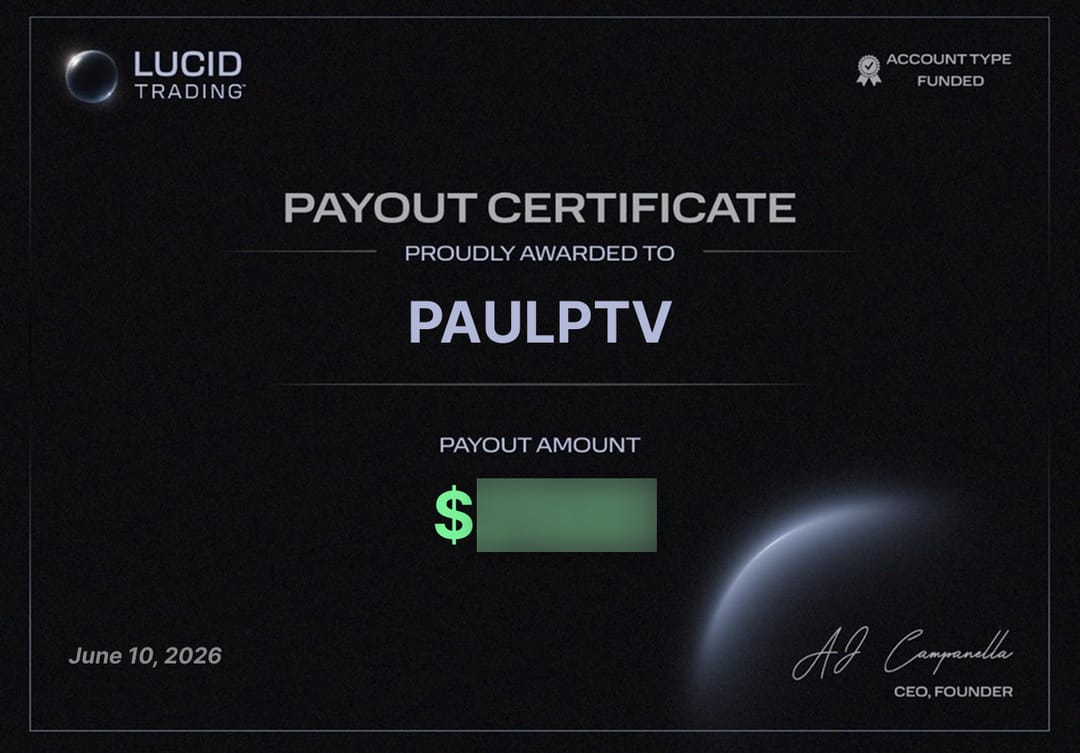
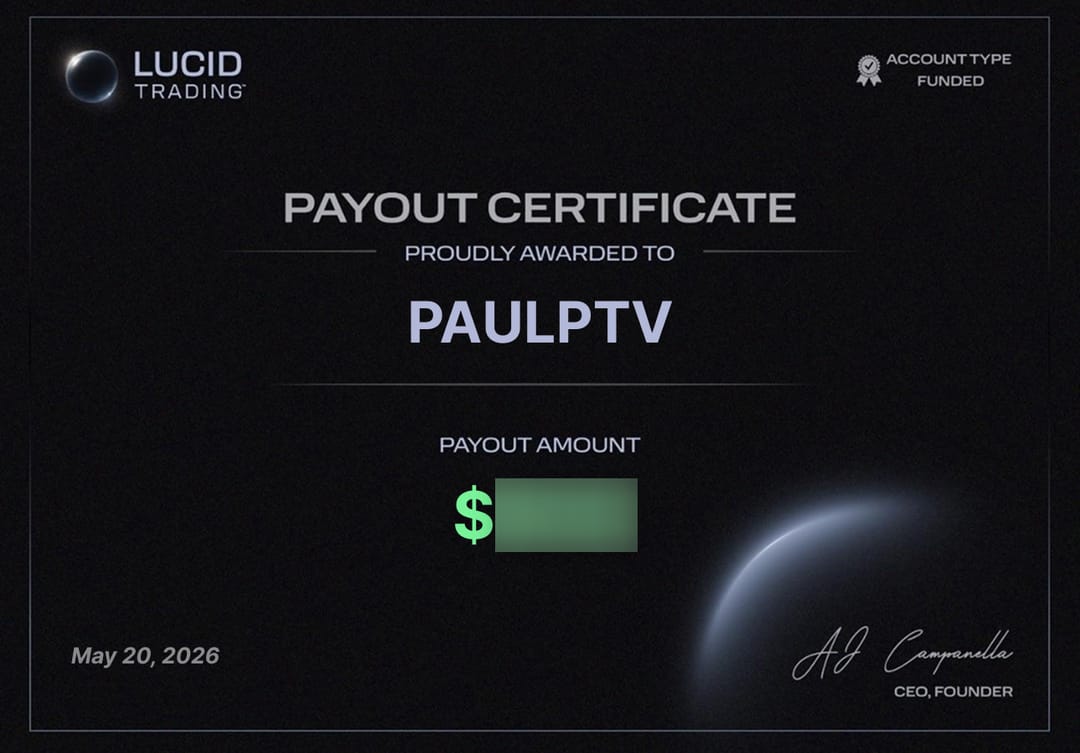
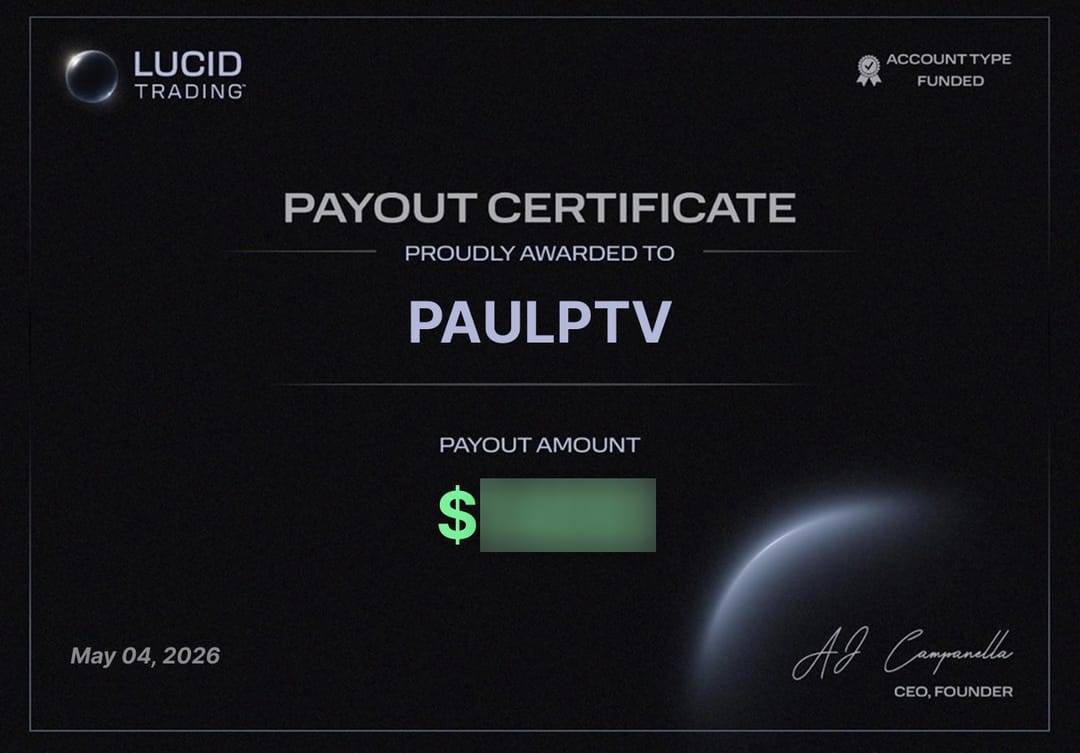
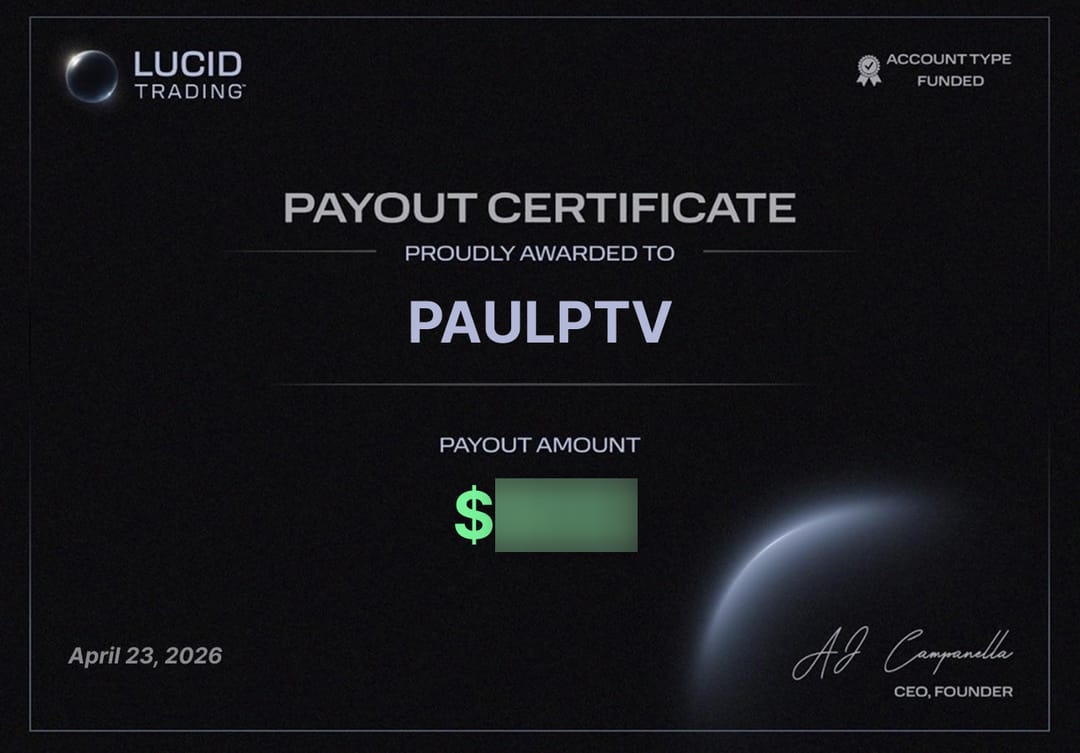
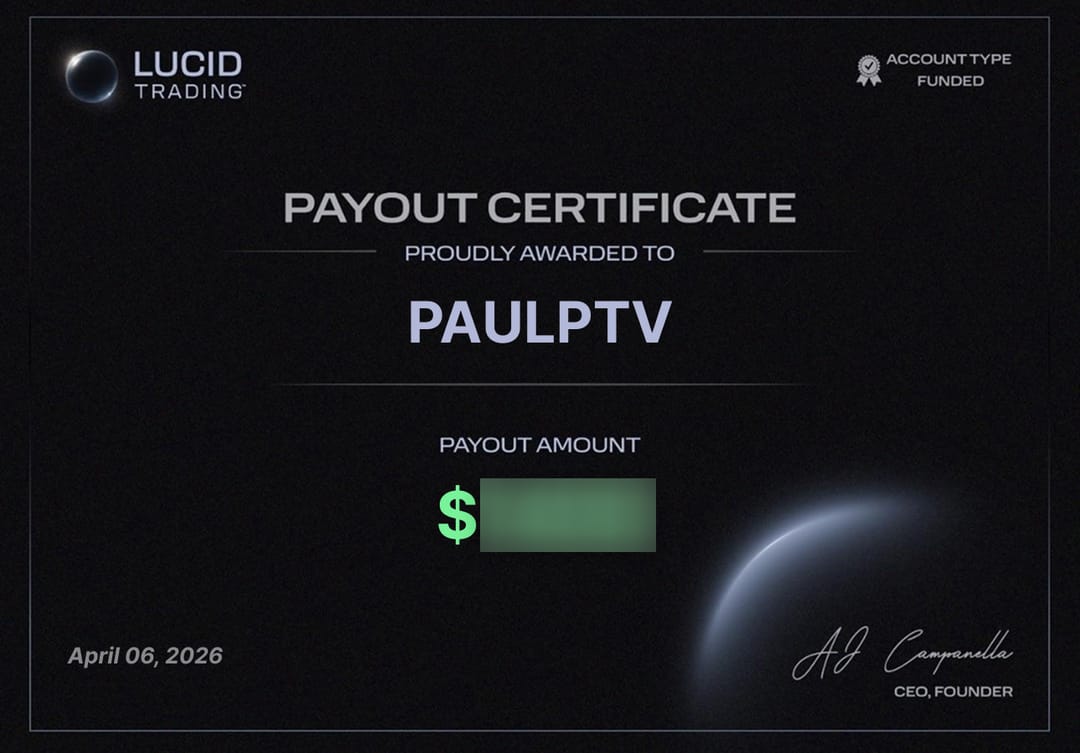
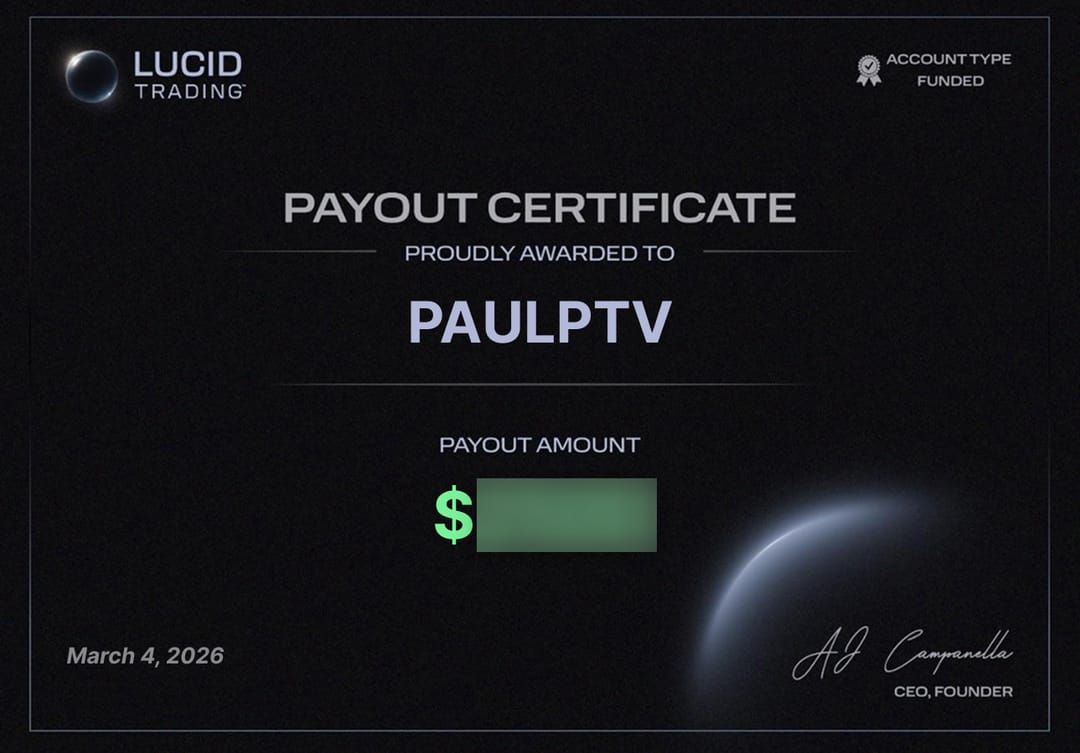
Firm-issued payout certificates from my own funded accounts. Amounts are redacted, the events are real.
What I like / could be better
What I like
- More than 30 payout cycles completed in my own LucidFlex and LucidPro accounts
- One-time purchase model on the current public account paths
- LucidFlex offers a forgiving simulated-funded payout structure without a consistency percentage
- LucidPro gives experienced traders a faster evaluation path
- Tradovate and TradingView worked well in my tested setup, with wider CQG and Rithmic support documented
What could be better
- Lucid launched in 2025 and has a shorter operating history than the oldest futures firms
- Frequent product changes make older reviews and videos unreliable
- Overnight and weekend holding are not supported
- LucidMaxx access criteria are not public
- Platform feed and payout-method availability can depend on the exact product and country
Is Lucid Trading worth it?
Lucid Trading is worth considering if you want a futures firm with one-time purchases, fast payout eligibility and several genuinely different ways to reach the payout stage. It is not the right choice if you want to hold overnight, need a long operating history or prefer one simple rule set across every account.
I have traded LucidFlex and LucidPro with my own money, passed multiple evaluations and completed more than 30 payout cycles across several account generations. My own payout record is the strongest reason for my 4.2/5 rating. Lucid's short history and frequent product changes are the reasons the score is not higher.
The current public purchase paths are LucidFlex, LucidPro, LucidDaily and LucidDirect. LucidMaxx is different: it is an invite-only status with an evaluation that eligible traders can buy. Those names are not cosmetic. The evaluation, simulated-funded stage, payout conditions and route to live capital can change with the selected product.
The account tool above owns the current price, drawdown and payout values for the exact setup you select. This review does the work a rule card cannot do: explain which account I would choose, what held up in my own trading and where Lucid still creates risk.
My short verdict: LucidFlex is the account I would show most traders first. LucidPro makes more sense for a trader who can handle a stricter profit distribution in exchange for a faster route. Daily and Direct solve narrower problems, and Maxx should not be treated as a normal checkout option.
How does Lucid Trading work from checkout to payout?
Lucid is a futures prop firm, not a broker account you fund with trading capital. You buy access to a defined account path, trade under its rules and become eligible to request a payout only after the conditions for that product and stage are met.
Is Lucid Trading a one-time fee or a monthly subscription?
The current public Lucid paths use a one-time purchase. Lucid does not charge a recurring monthly firm fee for the account itself. A reset is a separate purchase, and a platform or market-data provider can still have its own charge. I therefore compare total checkout cost, not just the first number in a promotion.
Evaluation and instant access lead to different starting points
Flex, Pro and Daily begin with an evaluation. Direct skips that evaluation and opens at the simulated-funded stage. Maxx is restricted to traders who have received access and uses its own evaluation-to-live route. None of those labels changes merely because two products share the same nominal account size.
Passing is the middle of the process
After an evaluation pass, the payout rules can change. The drawdown mode, daily loss configuration, profit-distribution test, buffer and qualifying-day requirement must be checked again for the new stage. This is why I plan from the payout account backwards instead of choosing the easiest-looking target.
A simulated-funded payout history can lead to a live review, but live placement is discretionary. It should not be presented as an automatic reward. Before each purchase, pass or payout request, I select the exact setup above and use the current stage-specific answer.
What I personally tested at Lucid Trading
I started with a 50K LucidFlex evaluation and traded NQ during the US morning session. I passed it, received the simulated-funded account and completed the payout process. Since then I have passed multiple LucidFlex and LucidPro evaluations and completed more than 30 payout cycles across several account generations.
I currently use a LucidFlex 50K and a LucidPro 50K. Most of my cycles came from Flex. Pro is the more aggressive account in my setup because the funded-stage consistency requirement leaves less room for one oversized day.
What actually held up
The positive part is not just that Lucid approved one withdrawal. I repeated the process. I have had no rejected withdrawal, no payout dispute and no unexplained review hold in my recorded Lucid history. Six redacted Lucid payout certificates from March through June 2026 are published in the proof tour on this page. Those six files are the public artifacts; the 30-plus figure is my wider cycle record.
Approvals in my own accounts have usually arrived in about 15 minutes. Lucid's current written commitment is broader: an approved payout is sent to the selected payment method within two business days. I separate those two facts because my fastest result is not a promise to every trader or payment rail.
Not every account survived
I have also breached accounts. One of the most useful lessons came from trading too aggressively around FOMC volatility. An end-of-day trailing drawdown does not protect an account from a loss-limit breach during the session. It only defines when the floor moves. A fast NQ move can still end the account before the close.
That changed how I use Lucid. I no longer start with the profit target or the marketing line about payout speed. I start with the funded-stage drawdown, the daily-loss configuration and the payout condition that will shape my next week of trading.
Where my first-hand coverage stops
I personally tested LucidFlex and LucidPro. I have not traded LucidDaily, LucidDirect or LucidMaxx. I cover those products from Lucid's current documentation and label them as researched rather than stretching my Flex and Pro history across the whole lineup.
I have also not personally completed the current LucidLive path. Flex, Pro, Daily and Direct normally begin with simulated trading and can move to live capital only after a discretionary call-up. LucidMaxx is the separate path that can lead from its evaluation to a live account. The selector makes that capital mode visible for each stage.
What I would do again
I would buy Flex again when I want the more forgiving payout structure. I would use Pro only when I am willing to build several balanced days rather than rely on one large session. I would still keep Lucid alongside another firm instead of treating any single prop company as my only counterparty.
How fast does Lucid Trading pay out?
In my own LucidFlex and LucidPro accounts, payout approvals have usually arrived in about 15 minutes. That is my repeated result across more than 30 payout cycles, not Lucid's promise to every trader.
The published service window is wider. Lucid says approved funds are disbursed to the selected payment method within two business days. Approval, account reconciliation and arrival at a bank, wallet or payment account are separate events, so a fast dashboard update should not be described as money already received.
Eligibility still comes before speed
Lucid cannot approve a request that does not meet the selected account's current conditions. Flex needs its qualifying profitable days and positive cycle profit. Pro adds a fresh-profit goal, buffer and consistency test. Daily works from its protected buffer and new profit. Direct has its own profit goal and tighter distribution rule. The account tool above shows the values for the setup you choose.
Payment method and country can change the last mile
A dated Lucid notice says traders in China, Hong Kong, Taiwan, Singapore and Malaysia must use WorkMarket instead of crypto, while the general Help Center still describes crypto more broadly for international traders. That conflict does not change the payout economics, but it can change how the money arrives. In those markets I would confirm the available rail before trading toward a withdrawal.
My practical sequence is simple: confirm eligibility, save the request confirmation, separate approval time from transfer time and keep the account record until the payment has arrived. The six public certificates on this page document selected completed events; they do not expose payout amounts.
Which Lucid Trading platforms fit your setup?
I use Tradovate for execution and TradingView for charts. That is the Lucid platform combination I can judge from real use. The connection has been straightforward for my NQ and MNQ workflow, and it avoids forcing a Mac user into a desktop-only Rithmic setup.
Lucid documents two wider platform routes. CQG covers Tradovate, TradingView and NinjaTrader. Rithmic opens the specialist ecosystem, including Quantower, Sierra Chart, Bookmap, ATAS, MotiveWave and R|Trader Pro. A long platform list is useful only when the selected account is issued on the feed you need.
Check the data feed, not just the logo
The platform name and the data feed are separate decisions. TradingView through Tradovate is a CQG route. A platform such as Bookmap or Sierra Chart normally points to Rithmic. Your dashboard credentials show the route assigned to the account, and Lucid does not document a self-service way to switch feeds after purchase.
LucidDaily is the edge case I would verify with support. Lucid's general platform page says the published list works across its accounts, while the Daily checkout path has been documented on Rithmic. I would not assume that a CQG platform is available on Daily until Lucid confirms the exact setup.
Mobile access is useful, but it is not mobile execution
Lucid has its own iOS and Android app for account metrics, payout requests, certificates, notifications and support. It is a dashboard companion. Trades still run through the connected trading platform. Tradovate and TradingView can cover mobile monitoring and order management; a NinjaTrader desktop workflow does not become mobile because the Lucid dashboard has an app.
What I would confirm before paying
- The exact platform and feed issued for the selected product.
- Whether the intended indicator, copier or automated tool is permitted.
- Any separate market-data or platform charge outside the Lucid purchase.
- The session close and forced-flatten time for the account.
Lucid does not offer swing-style overnight holding on its standard futures paths. If keeping positions through the close is part of the strategy, the number of supported platforms does not solve the underlying mismatch.
Which Lucid Trading account should you choose?
Choose from the stage you ultimately want to trade, not from the easiest-looking evaluation. Lucid's products can share an account size while behaving differently once a payout is the goal.
LucidFlex: my default for most traders
Flex is the first account I would compare. It uses an end-of-day trailing drawdown and lets you choose whether to add a daily loss limit. In the simulated-funded stage there is no payout consistency percentage. Instead, the account asks for five qualifying profitable days and positive net profit in the current cycle.
That structure works well when daily results are uneven. One strong day does not create a consistency problem, but it also does not finish the cycle by itself. The request is limited by both a share of profit and an account-size cap, so I do not keep trading solely to chase the maximum withdrawal.
Flex fits a trader who values breathing room and is comfortable building several profitable days. The tradeoff is time: it is not the shortest path from evaluation to the next eligible payout.
LucidPro: faster, but less forgiving
Pro removes the evaluation best-day rule and can be passed after one trading day. The simulated-funded stage then introduces a 40% payout consistency rule, a fresh-profit goal and a required buffer. A trader who makes most of the cycle profit in one session must keep trading until the distribution is compliant.
That is why I treat Pro as the aggressive account. The short evaluation is attractive, but the funded-stage math is the real product. I use smaller size and plan several contributing days instead of trying to force the whole cycle on day one.
Pro fits an experienced intraday trader who already knows the shape of their P&L. It is a poor shortcut for someone who keeps failing because of oversized trades.
LucidDaily: frequent access after a protected buffer
Daily is built around payout requests on any eligible day. The simulated-funded account has no payout consistency rule, but profit has to sit above the protected buffer and there must be new profit after the last approved request. Evaluation drawdown and daily-loss options also change with the selected configuration.
I have not personally traded Daily. I would compare it when frequent withdrawals matter more than the simpler Flex cycle, then use the selector to inspect the exact evaluation and funded-stage combination before buying.
LucidDirect: no evaluation does not mean live capital
Direct skips the evaluation and begins in a simulated-funded stage. That distinction matters. The purchase is not a live brokerage allocation. Direct uses its own profit goal, payout caps and a 20% consistency rule, with the daily loss setup changing by size.
I would consider Direct only if the main problem is repeatedly paying for evaluations and the stricter payout distribution already fits the strategy. Skipping a target-based test does not make the risk rules disappear.
LucidMaxx: an earned route, not the standard recommendation
Maxx is invite-only. Lucid decides who receives the status, and the qualification criteria are not public. Eligible traders can buy a Maxx evaluation that leads to a live-capital stage rather than the normal simulated-funded stage.
The product is interesting because the destination is different, but it is not actionable advice for a reader who has not received access. I would not present Maxx as the best Lucid deal without stating that gate.
How I manage a LucidFlex 50K
The firm-level maximum loss is $2,000 on the Flex 50K setup I trade. I do not use all of it as a daily risk budget. My maximum planned risk on one trade is $400, and I stop the session after $600 of losses. Those are my controls, not Lucid rules.
I usually trade one NQ contract or use MNQ when I need finer sizing. The purpose is to keep a normal losing session far enough from the account's failure point that I can trade the next day without needing a recovery trade.
For payouts, I prefer a comfortable withdrawal over the theoretical maximum. Once I have met the selected account's actual requirements, I request the payout and reduce the amount left exposed to firm risk. On Pro, I spread the work across days because the consistency rule punishes a cycle dominated by one result.
The selector above should be the last rule check before purchase and before a payout request. My process is the interpretation layer: size below the firm limit, plan for the funded stage and do not keep trading merely because a larger cap exists.
Which Lucid Trading rules cause the most problems?
The dangerous Lucid rule is rarely the one with the largest headline. Problems usually come from applying the right number to the wrong product or stage.
How does Lucid Trading max drawdown work?
As of September 2026, LucidFlex and LucidPro evaluation and simulated-funded accounts use end-of-day trailing drawdown. LucidDirect simulated-funded accounts also use end-of-day trailing drawdown. A LucidDaily evaluation uses the EOD or intraday option selected at checkout, while every LucidDaily simulated-funded account trails intraday. LucidLive uses EOD drawdown. Check the product, stage and size in the account selector above before trading.
| Lucid account and stage | Drawdown basis | MLL or starting live drawdown: 25K / 50K / 100K / 150K |
|---|---|---|
| LucidFlex evaluation and simulated funded | EOD trailing | $1,000 / $2,000 / $3,000 / $4,500 |
| LucidPro evaluation and simulated funded | EOD trailing | $1,000 / $2,000 / $3,000 / $4,500 |
| LucidDirect simulated funded | EOD trailing | $1,000 / $2,000 / $3,500 / $5,000 |
| LucidDaily evaluation | EOD or intraday, selected at checkout | $1,000 / $2,000 / $3,000 / $4,500 |
| LucidDaily simulated funded | Intraday trailing | $1,000 / $2,000 / $3,000 / $4,500 |
| LucidMaxx evaluation | Eval page does not state EOD vs intraday; Maxx overview lists EOD as a plan benefit | $1,000 / $2,000 / $3,000 / $4,500 |
| LucidLive, including the Maxx live stage | EOD trailing | $1,000 / $2,000 / $3,000 / $4,500 starting live drawdown |
On Lucid’s EOD plans, the MLL rises from the highest closing balance until the Initial Trail Balance is exceeded, then locks at the starting balance plus $100. Reaching the active MLL breaches the account. EOD describes when the floor moves; it does not create an intraday recovery window after the floor is reached. LucidDaily funded accounts differ because unrealized P&L moves the floor during the session.
LucidLive starts at $0 with a separate starting live drawdown. Its MLL locks at $100 after live profit reaches that starting drawdown, or when a live payout is requested first. Lucid’s Flex drawdown page also says a Flex payout automatically moves the MLL to the locked balance. That payout adjustment is single-source official guidance from Lucid, checked September 14, 2026.
The daily loss limit may be optional, but the choice is real
Flex, Pro and Daily can offer different daily-loss configurations. A soft daily stop can pause trading without closing the account, while the maximum loss limit remains the hard failure boundary. The selected option belongs to the account record; it should not be guessed from a generic Lucid video or another trader's checkout.
Payout consistency changes the way you trade
Flex and Daily do not use the same funded consistency percentage as Pro or Direct. On a consistency-bound account, one oversized winning day can delay eligibility even if the balance is profitable. On Flex, the relevant challenge is building the required profitable days without giving back the account. The correct response is different position sizing, not a universal Lucid strategy.
News and close rules are product-specific
Lucid is built for intraday futures trading. Positions must be flat for the applicable close, and LucidDaily has a funded-stage news restriction that should not be projected onto every other product. If your edge requires holding overnight or staying exposed through restricted releases, Lucid is a poor fit regardless of the discount.
My rule order is: current loss floor, hard breach conditions, daily stop, session restrictions, payout distribution and only then the profit target. That order protects the account that exists now instead of the evaluation you already passed.
Is Lucid Trading legit? What my payouts prove
Yes, I regard Lucid Trading as a legitimate futures prop firm. I have completed more than 30 payout cycles across LucidFlex and LucidPro, with no rejected withdrawal or payout dispute in my recorded history. Six redacted firm-issued certificates are public on this page.
That evidence has limits. It proves that I reached the payout stage repeatedly and Lucid paid my requests. It does not guarantee another trader's result, verify a product I did not trade or promise that the company will behave the same way forever.
What still makes me cautious
- Short operating history: Lucid launched in 2025. My payout record is positive, but the company has not been through as many market and regulatory cycles as the oldest firms.
- Fast product changes: Flex, Pro, Daily, Direct, Maxx and LucidLive have evolved quickly. An older video can describe a product that no longer exists.
- Invite-only opacity: Lucid publishes the Maxx product but not the criteria used to award access.
- Discretionary live transition: Reaching the required simulated payout history can put an account into the live call-up process. It does not make live allocation an automatic entitlement.
I am comfortable continuing to trade Lucid because the firm has paid me repeatedly. I still diversify across firms, recheck the selected account and withdraw when eligible. Payout evidence should improve a decision, not switch off risk management.
Who owns Lucid Trading, and how long has it operated?
Lucid Trading is a US-based futures prop firm founded in 2025 by AJ Campanella. The Lucid Trading App is published under Lucid Trading Group LLC. Campanella is visible in the firm's public communication, but founder visibility is not a substitute for a long operating record.
The short history is the main reason I do not score Lucid higher despite my own results. A firm that launched in 2025 has not faced as many market cycles, policy changes or scaling tests as the oldest futures operators. More than 30 completed payout cycles tell me that Lucid's process worked repeatedly for me; they do not create years the company has not yet operated.
I give more weight to evidence that can be tied to a date and event: the accounts I bought, the stages I reached, the payout requests Lucid completed, the current product owners and the company's response when rules changed. Trustpilot can reveal complaint patterns, but its score is a separate signal and can move without any change to my first-hand record.
My conclusion is positive but bounded. I consider Lucid legitimate and continue to trade it. I also keep records, recheck material rule changes and avoid putting every prop account with one counterparty. That is the level of confidence a young firm with a strong personal payout record has earned.
Lucid Trading vs Topstep, Tradeify and TakeProfitTrader
I would not choose among these firms from a static price table or a row of Trustpilot scores. Promotions, account paths and payout rules change too often. The useful comparison starts with the tradeoff you actually care about.
Choose Lucid for one-time access and product choice
Lucid's public paths use a one-time purchase rather than a monthly firm subscription. It also gives you several payout structures: Flex for a more forgiving cycle, Pro for a faster but consistency-bound route, Daily for frequent eligible requests and Direct for skipping the evaluation.
Tradeify is the closest comparison when you also want one-time pricing and several account mechanics. Compare the funded-stage drawdown and payout distribution, not just the checkout discount.
Choose Topstep for operating history and a simpler story
Topstep has a much longer operating record and a more concentrated product ecosystem. That can matter more than Lucid's flexibility if counterparty history and a familiar process are the priorities. The tradeoff is less platform choice and a different cost path.
Choose TakeProfitTrader for a different funded-stage model
TakeProfitTrader is worth comparing when its subscription and funded-account structure fit your pace better than a Lucid one-time purchase. Its platform and drawdown behavior are not interchangeable with Lucid, so the decision should follow the exact account rather than a brand-level score.
My recommendation by trader type
- Newer intraday trader: start with LucidFlex and keep the position size conservative.
- Consistent scalper: compare LucidPro when several balanced profit days are already normal.
- Frequent-withdrawal trader: compare LucidDaily against the buffer and drawdown options.
- Evaluation-fatigued trader: inspect LucidDirect, but remember that it starts simulated and has tighter payout math.
- Risk-first trader: prefer Topstep's history or spread accounts across more than one firm.
Lucid wins my personal comparison when Flex or Pro matches the way I already trade. It should not win simply because I have been paid there. The account still has to fit your own loss distribution, platform and withdrawal plan.
Who should avoid Lucid Trading?
Skip Lucid if your strategy needs overnight or weekend positions. The standard paths are designed for intraday futures trading, and a broad platform list does not change the close requirement.
Look elsewhere if you want one account type with one rule set. Lucid's choice is valuable, but Flex, Pro, Daily, Direct, Maxx and the later live stage demand careful product and stage tracking. A trader who will not recheck the selected account after a pass or payout is more likely to act on the wrong rule.
LucidPro and Direct are also poor fits when one large winning day normally dominates your profit. Their payout-distribution rules can force extra trading after the account is already profitable. Daily is not the obvious alternative if intraday trailing drawdown or its funded news restriction conflicts with your approach.
Finally, choose an older operator if company longevity matters more than my repeated payout evidence. I rank Lucid highly because Flex and Pro worked for me more than 30 times. I would not turn that experience into a claim that Lucid is the safest choice for every trader.
Frequently asked questions
What happened to LucidBlack?
LucidBlack is no longer sold. Its remaining Help Center pages are labeled legacy, and Lucid has not published a current purchase or migration path. Treat any Black pricing or rules in an older review as historical.
Does Lucid Trading have a mobile app?
Yes. Lucid's iOS and Android app covers account metrics, payout requests, certificates, notifications and support. It is a dashboard companion, not the trading platform. Orders still run through the platform connected to the account.
Can I hold positions overnight at Lucid Trading?
No. Lucid requires positions to be flat before the applicable close, and its documented live setup also prohibits swing trading. Confirm the exact cutoff for the selected feed and holiday schedule before trading late in the session.
Key details
- Founded
- 2025
- Asset classes
- Futures
- Platforms
- Tradovate, NinjaTrader, TradingView, Sierra Chart, Quantower, MotiveWave, Bookmap, ATAS, R|Trader Pro
- Profit split
- 90%
- Payout frequency
- Daily to 10-Day Cycles
- Drawdown
- EOD trailing
- Max funding
- $150,000 per account
- Restricted countries
- 81 (Afghanistan, Albania, Algeria, Angola…)
- Discount code
- VIBES · 40% off
What to check next
Focused guides for the next decision about Lucid Trading.
- Next step LucidFlex account rules The flagship product path, including drawdown and payout context.
- Next step Lucid Trading payout rules Current payout mechanics across the active account types.
- Next step Lucid Trading platforms Choose the supported execution stack.
- Next step Lucid Trading country access Confirm current jurisdiction eligibility before purchase.
- Evidence PTV Lucid payout records Six redacted Lucid payout artifacts indexed by date.
All Lucid guides37 articles
Reviewed by PaulFounder & Full-Time Funded Trader · 50+ firms tested with real money
Review changelog: Sep 6, 2026 (REVIEW): Expanded the Lucid entity review with direct answers about the purchase-to-payout flow, payout speed, breach risk, ownership, operating history and clear reasons to skip the firm. Current account values remain owned by the selector.
Risk note. A prop-firm evaluation fee is a cost, not an investment, and most buyers never reach a payout. Funded accounts are simulated capital, and firms can change rules or shut down. Never pay for an evaluation with money you cannot afford to lose.
I may earn a commission if you sign up through my link. It never changes my rating or verdict. I tested this firm with my own money.
40% off code VIBES
Save 40% at Lucid Trading